Chicago Metropolitan Area: 2025 Metro Population, Top Suburbs & Chi-Town Meaning
On This Page:
- Your Kind of Town, Chicago is…
- Where Does the Name Chicago Come From?
- How Large is the Chicago Metropolitan Area?
- Chicago’s Metro Area Population Continues to Grow
- Chicago O’Hare International Airport (ORD)
- Chicago Midway International Airport (MDW)
- Traveling to Chicago by Train
- Chicago is the “Home of the Skyscraper”
- Famous Chicago Sports Teams
- Booking the Best Hotels in Chicagoland
- Plan Ahead For the Best Rates
10. Your Kind of Town, Chicago is…
It may no longer officially be “Second City” based on its population, but Chicago is still the place that most people think of after New York when it comes to large American cities with a spectacular skyline. With an energy that ranks right up there with other large U.S. and global cities, a stunning lakefront, amazing food scene, world-class museums and a diverse international atmosphere, Chicago is definitely your kind of town.
Let’s take a look at some of Chicago’s interesting history and statistics.
Author: Chait Goli
Chicago, IL, United States
10. Where Does the Name Chicago Come From?
Early French settlers interpreted the Miami-Illinois band of Native Americans word ‘shikaakwa’, to be Chicago using their language. Meaning ‘wild onion’ or ‘wild garlic’, this was a reference to the allium tricoccum plant which grew abundantly along the shores of what would later be known as the Chicago River. The local Indigenous tribes shikaakwa later became ‘Chicagou’ in French.
The most popular nicknames for Chicago include ‘Chi-town’, ‘Chicagoland’ which works for the entire region, ‘The Windy City’, ‘City of Big Shoulders’, and ‘The City that Works’.
10. How Large is the Chicago Metropolitan Area?
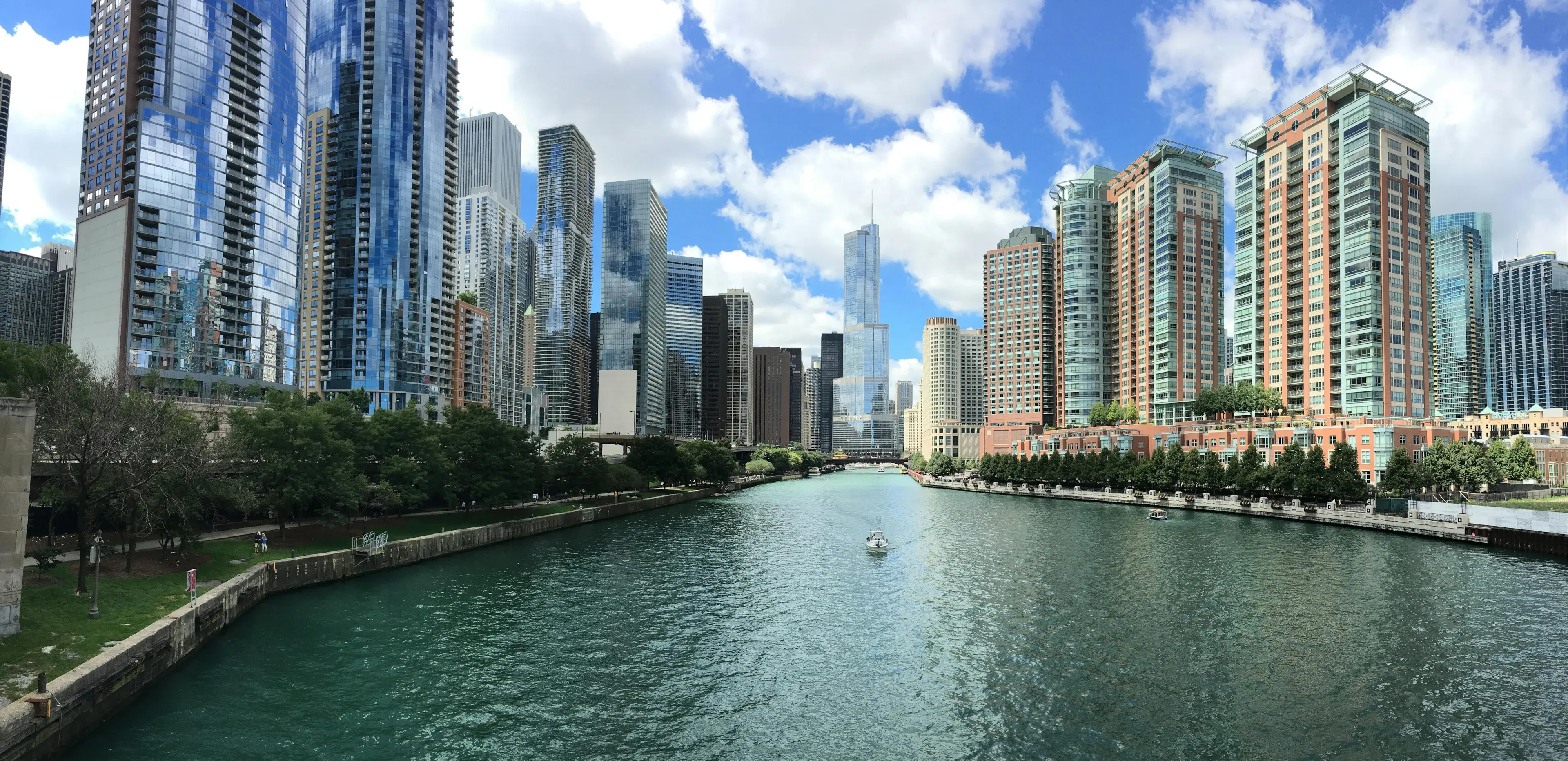
This sprawling area includes 10,286 square miles of which just 231 square miles are officially within the city limits of Chicago. However, most visitors spend the majority of, if not all of their time within the city’s boundaries.
In addition to Cook County, which includes Chicago plus the northern suburbs, there are several large suburban Illinois counties, as well part a portion of northwest Indiana and southern Wisconsin that are considered part of ‘Chicagoland’.
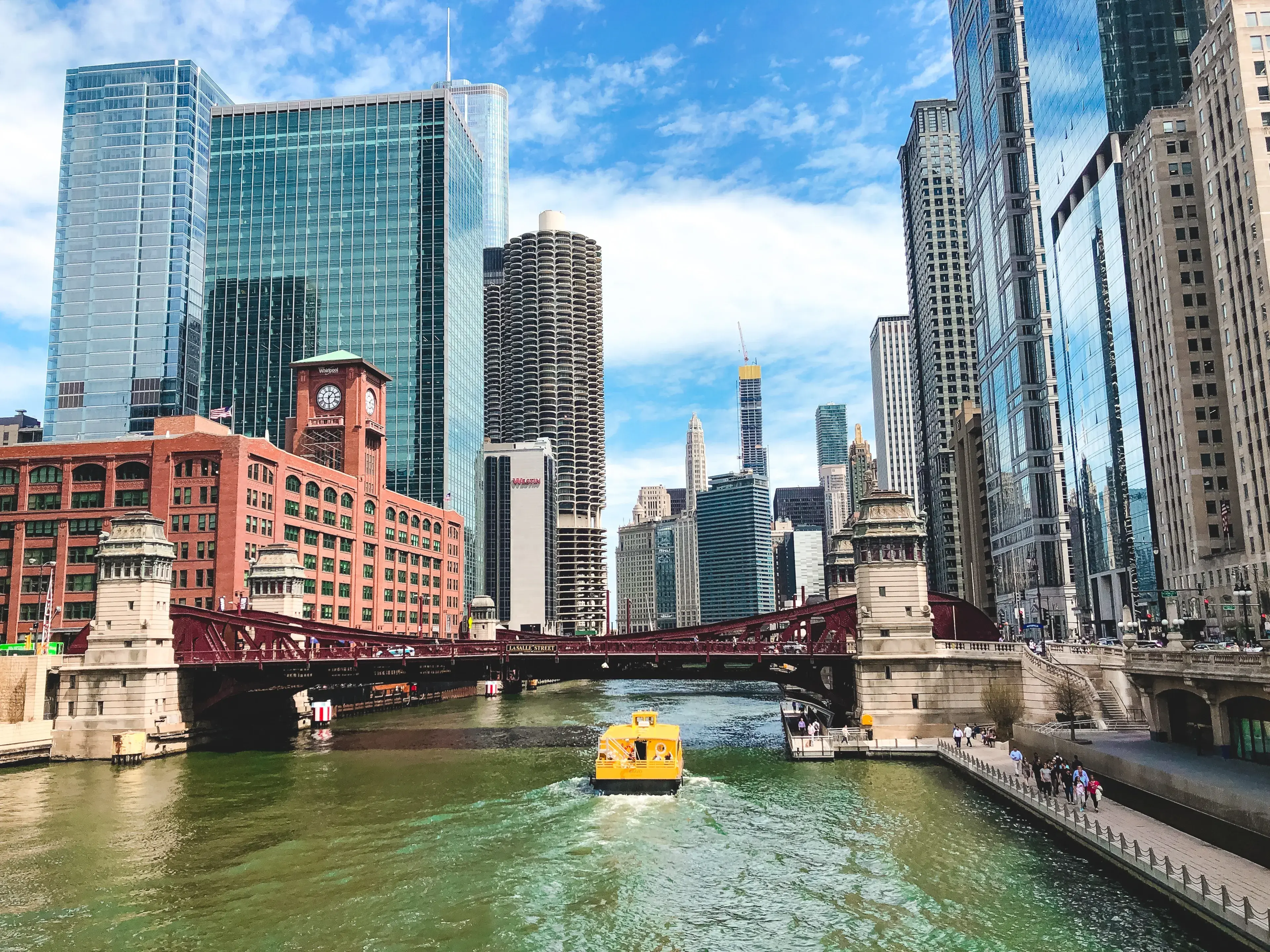
Author: Grzegorz Zdanowski
City With River in Middle during Cloudy Day
10. Chicago’s Metro Area Population Continues to Grow
- City population: 2.72 million. (peaked at 3.62 million in 1950 when the metro area population was just 5.94 million residents.)
- City population U.S. rank: 3rd, behind New York City with 8.48 million, and Los Angeles with 3.87 million. After Chicago, the 4th and 5th largest U.S. cities by population are Houston with 2.39 million, and Phoenix with 1.67 million residents.
- Metro area (known locally as Chicagoland) population: 9.44 million.
- Metro area population rank: 3rd, behind New York City with 19.16 million, and Los Angeles with 12.67 million. After Chicago, the 4th and 5th largest U.S. metro areas by population are Dallas/Ft. Worth with 8.30 million, and Houston with 7.37 million residents.
FUN FACT: What’s the largest North American metro area by population? How about Mexico City, with 22.75 million residents.
10. Chicago O’Hare International Airport (ORD)
- Distance to downtown (the Loop): 18 mi. (29 km.) northwest.
- Airlines: 44, including most international carriers. United (UA) and American (AA) operate major hubs here.
- How to get downtown: Take the CTA (Chicago Transit Authority) Blue Line train for the most economical option. Taxis, ride share (Uber, Lyft), and shuttle vans are also popular. Bringing your personal or rental car downtown is doable, but parking is expensive. Chicago’s numerous freeways are notoriously jam-packed, and not only during rush hours.
FUN FACT: With 2,442 daily takeoffs and landings, O’Hare was once again the world’s busiest airport in terms of flights in June of 2025. (Hartsfield-Atlanta International Airport remains the world’s #1 in terms of passengers served.) The airport’s flight volume is achieved through the use of eight runways, though delays are not infrequent due to ground and air pattern congestion. Chicago O’Hare remains a crucial air passenger and cargo operations facility for the world.
Author: Chait Goli
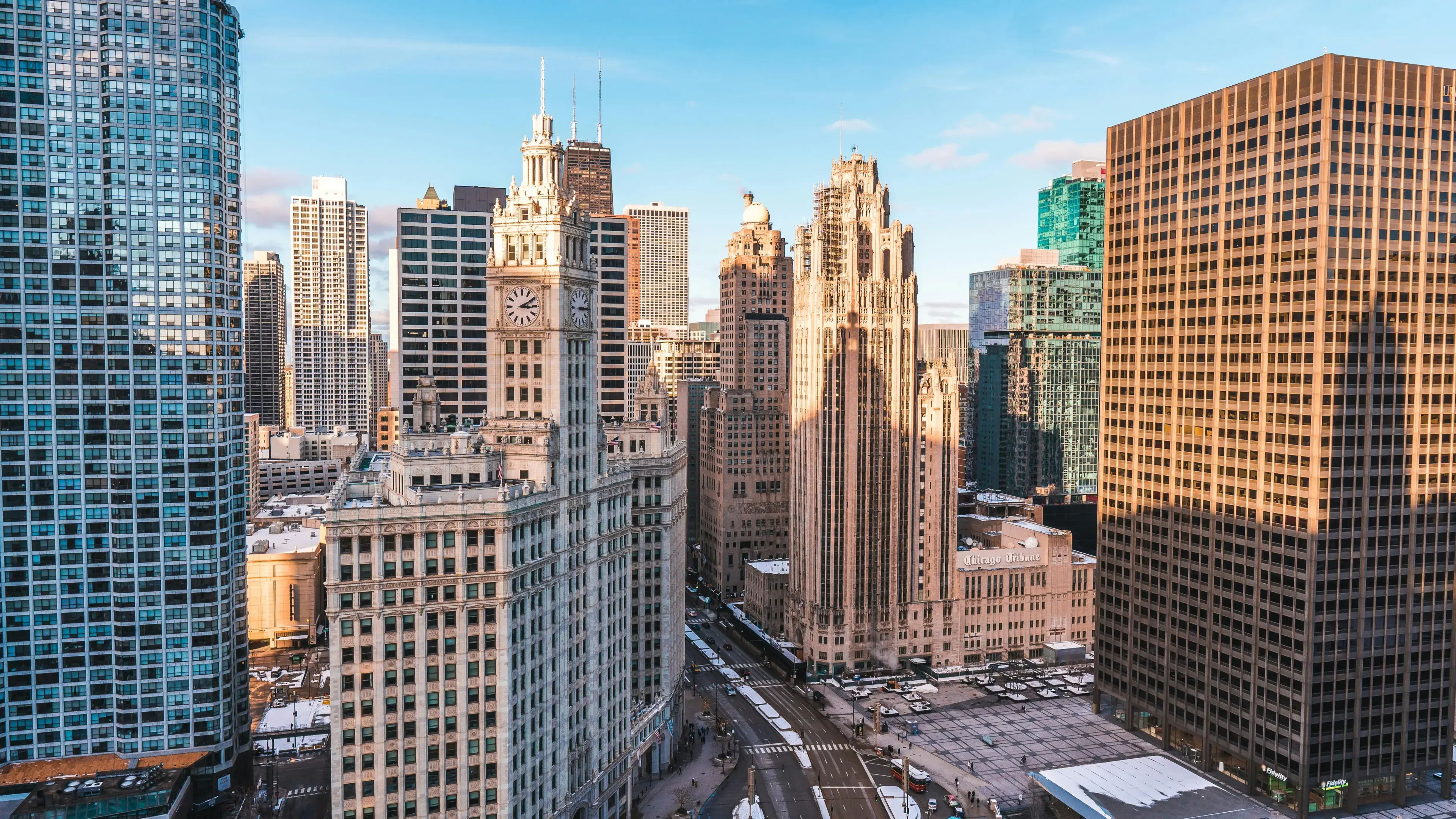
Aerial Shot Of Buildings
10. Chicago Midway International Airport (MDW)
- Distance to downtown: (the Loop): 10 mi. (16 km.) southwest.
- Airlines: 6, with Southwest’s hub providing more than 90% of the flights.
- How to get downtown: Take the CTA Orange Line train for the most economical option. Taxis, ride share (Uber/Lyft), and shuttle vans are also popular. Bringing your personal or rental car downtown is doable, but parking is expensive. And getting around town by car can be slow and frustrating due to traffic jams which can occur throughout the day, including weekends.
10. Traveling to Chicago by Train
Traveling by rail isn’t nearly as popular in the U.S. as it is in Europe or Japan, but there are still plenty of people who prefer riding a train to flying, taking a bus, or driving a car to get around. Amtrak, the national rail operator, serves more than 500 destinations across the U.S., with Chicago Union Station in downtown being an integral part of the system.
Trains arrive daily from across the country, with a strong emphasis on other Midwest cities including St. Louis, Milwaukee, Detroit, Minneapolis/St. Paul, Madison, Indianapolis, and Kansas City. From the conveniently located station, many hotels are within walking distance, or just minutes away by taxi or rideshare (Uber/Lyft) to the restaurants, shops, and abundance of hotels on or close to North Michigan Avenue. Make use of the map feature on the Travelated hotel website to find hotels close to where you want to stay.
Author: Pixabay
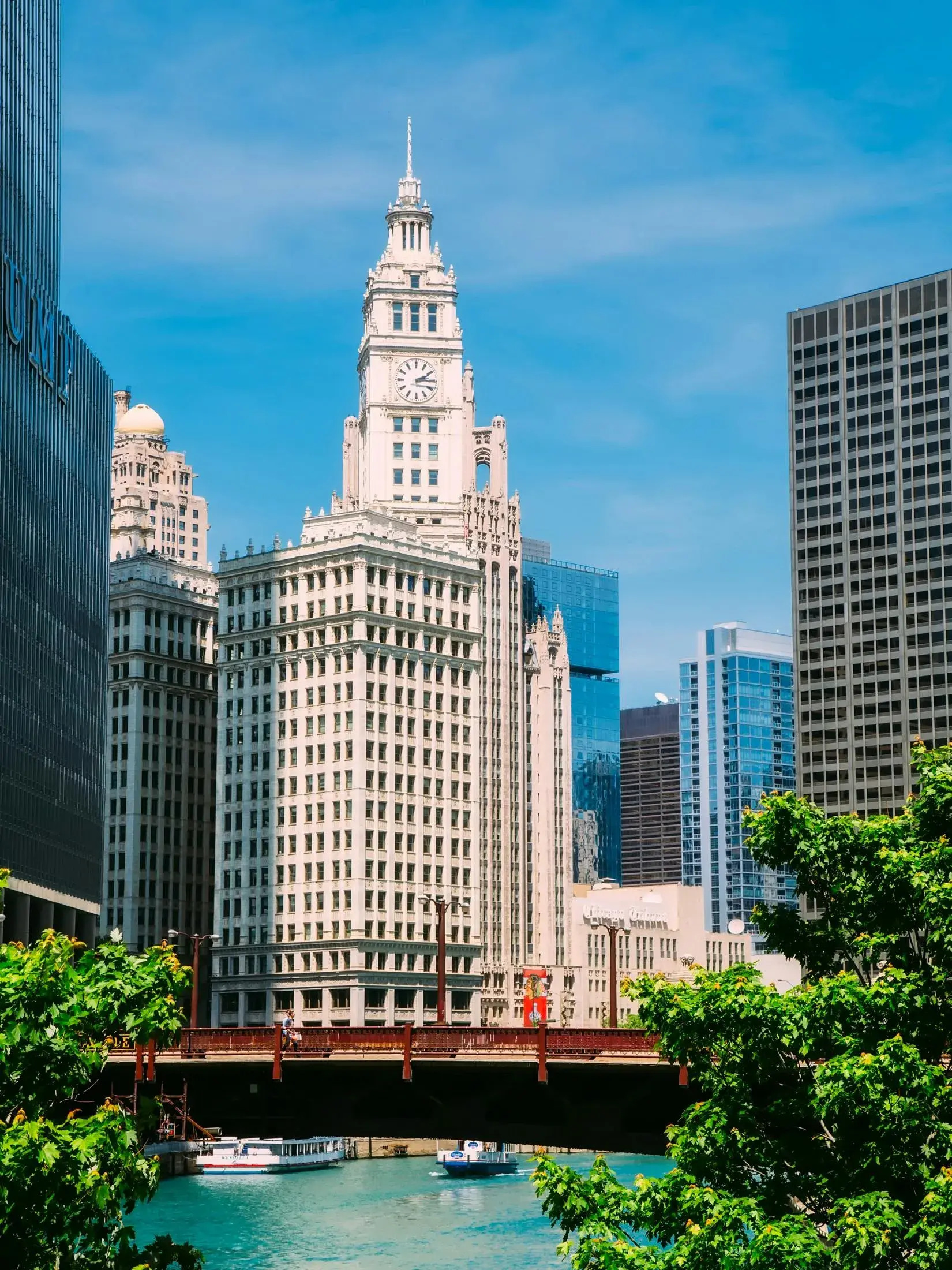
Clock Tower In Chicago
10. Chicago is the “Home of the Skyscraper”
Chicago is known worldwide for its magnificent skyline on the shores of Lake Michigan. But did you know this is where the world’s first skyscraper was erected way back in 1885? When the 10-story Home Insurance Building opened it heralded in major changes for architectural achievements that continue to this day. What was seen as an amazing feat back then (the building was later expanded to 12 floors!), is commonplace today.
Today’s Chicago has 137 buildings that are at least 500 ft. (152 m.) tall. Only New York City’s skyline is larger in the Western Hemisphere. The tallest of these skyscrapers, all at least 1,000 ft. in height, are:
- 1/ Willis Tower (originally the Sears Tower); 1,451 ft./442 m.
- 2/ Trump International Hotel; 1,388 ft./423 m.
- 3/ St. Regis; 1,198 ft./363 m.
- 4/ Aon Center (originally the Standard Oil Building); 1,136 ft./346 m.
- 5/ 875 N. Michigan Ave. (originally the John Hancock Building); 1,127 ft./344 m.
- 6/ Franklin Center; 1,007 ft./307 m.
Just think, the Home Insurance Building was a marvel at just 180 ft. in height.
10. Famous Chicago Sports Teams
Are you coming to Chicago for a sporting event? The city is well known as the home of an impressive collection of professional sports teams.
- Chicago Cubs, Major League Baseball (MLB) – The National League ‘Cubbies’ play at historic Wrigley Field on the north side of town from April through September, and into October if they make the playoffs. The 41,649-seat stadium opened in 2014 and is the second oldest in the league after Fenway Park in Boston which opened in 1912.
- Chicago White Sox, Major League Baseball (MLB) – The American League ‘Sox’ play at 40,615-seat Rate Field on the south side of the city, also from April through September. If and when they return to the post-season playoffs (it has been a while), they will also play October baseball.
- Chicago Bulls, National Basketball Association (NBA) – The Bulls play at United Center located on Madison St., two miles due west of the downtown Loop.
- Chicago Blackhawks, National Hockey League (NHL) – The ‘Hawks’ also play at the 21,500-seat United Center just west of downtown.
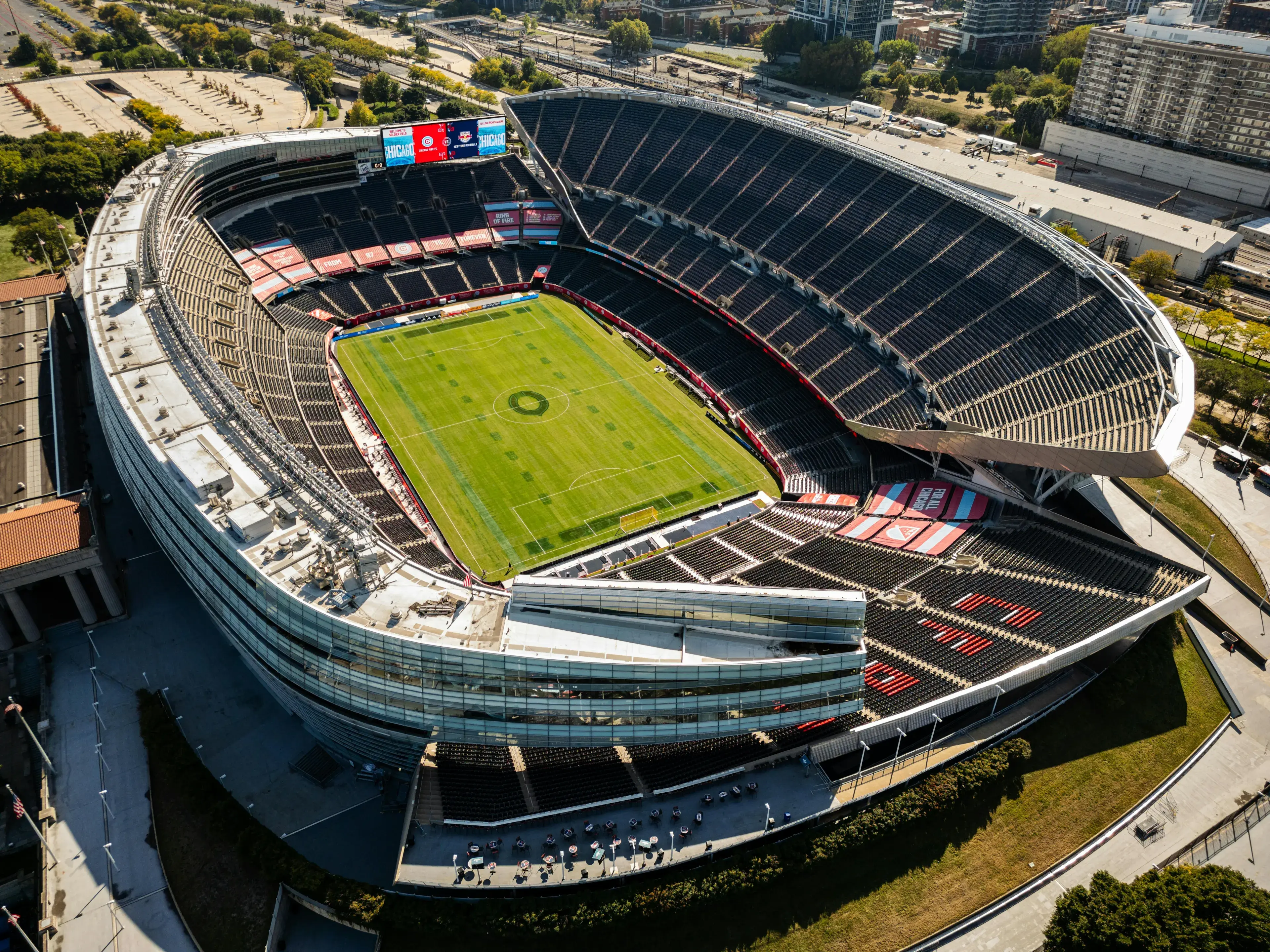
- Chicago Bears, National Football League (NFL) – ‘Da Bears’ play their home games at 61,500-seat Soldier Field located on Lakeshore Drive just minutes south of downtown.
- Chicago Fire, Major League Soccer (MLS) – The Fire also play at Soldier Field located on the lakeshore south of downtown.
With all of Chicago’s major league sports teams playing their home games within the city limits and quite close to downtown, the best places to stay for easier access to the various stadiums is either in the downtown Loop business district, or just north across the Chicago River close to N. Michigan Avenue, also known as the Magnificent Mile. Combined these two adjacent areas offer nearly 46,000 rooms at more than 180 hotel properties.
For a thorough search of these hotels and other unique accommodations on the Travelated website, our preferred place to go for the widest selection of properties at the best prices, focus your search on ‘Loop, Illinois’ after initially entering ‘Chicago’.
Author: Willian Justen de Vasconcellos
Aerial View of Modern Soccer Stadium in Urban Setting
10. Booking the Best Hotels in Chicagoland
With the Chicago area sprawling across northeastern Illinois as it does, it’s good to know the various areas that are the best to stay in depending on whether your plans call for you to be downtown or in the suburbs.
The greatest concentration of Chicagoland hotels will be found in four primary areas. To begin with and as noted above there are the downtown ‘Loop’ and N. Michigan Avenue neighborhoods which are separated by the Chicago River. These are best areas to stay if you are visiting the famous museums such as the Art Institute of Chicago or Field Museum of Natural History, Millenium Park, shopping downtown, attending a sporting event, concert or theater, or seeking Chicago’s best restaurants.
The three other best areas to consider for a stay near Chicago are:
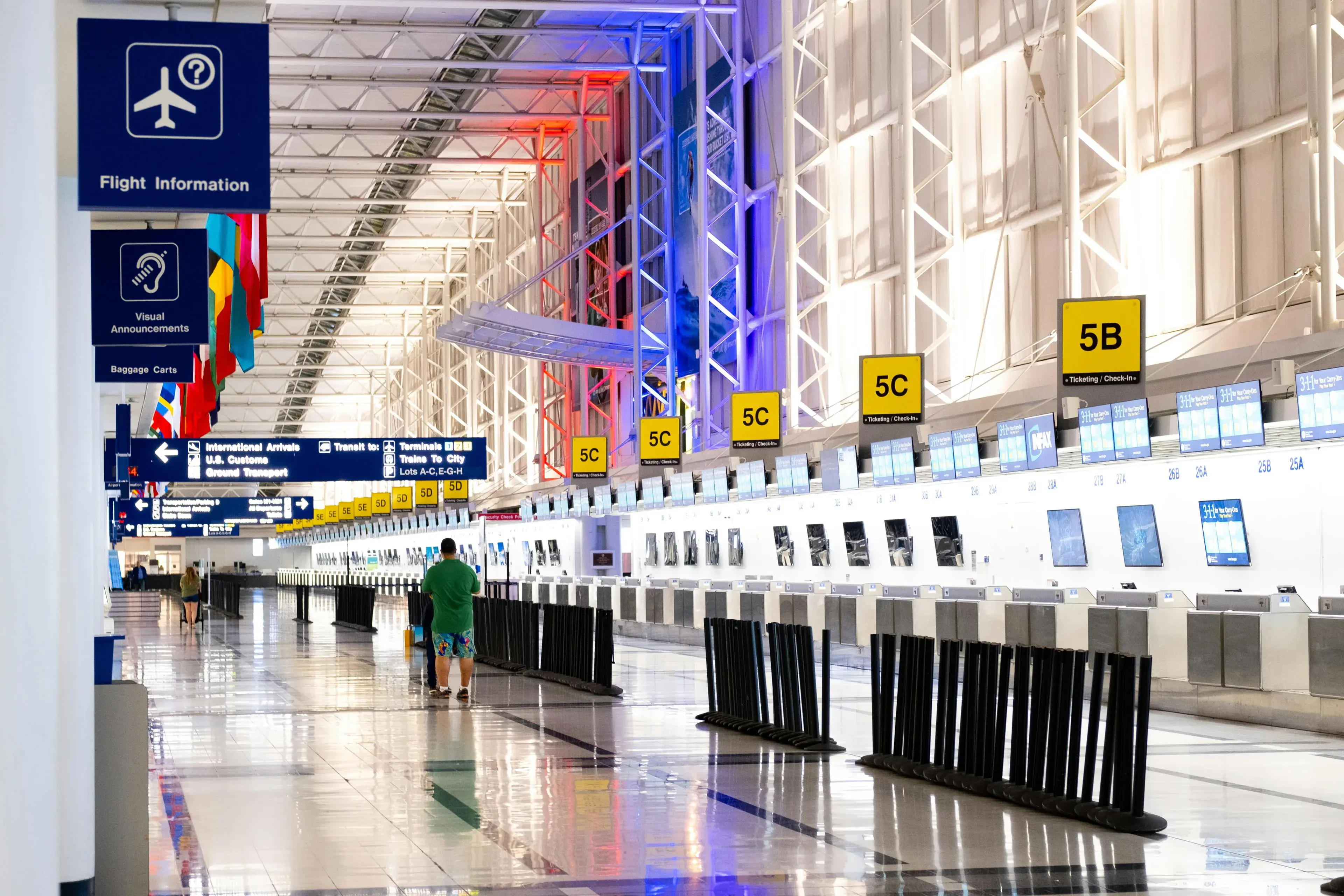
Chicago O’Hare International Airport - As one of the busiest airports in the world, it comes as no surprise that there are nearly 60 hotels within minutes of Chicago O’Hare. The airport is 18 miles northwest of the downtown/Loop area at the intersection of I-90 (Kennedy Expwy.) and I-294 (Tri-State Tollway which passes around Chicago, linking northwest Indiana with south Wisconsin).
Schaumburg – Thirty-one miles northwest of the downtown/Loop area and 13 miles beyond O’Hare is the suburban city of Schaumburg which offers several high-rise hotels with hundreds of rooms that appeal mainly to business travelers, and dozens of franchise properties under the Marriott, Hilton, IHG, and other major hotel company umbrellas. Schaumburg is home to Woodfield Mall, the largest in the Chicago area. With I-90 (the Northwest Tollway which becomes the Kennedy Expwy. upon entering Chicago), and I-290 intersecting here, this bustling suburban region is an excellent choice if downtown Chicago isn’t part of your plan.
Oak Brook - Located 19 miles west of the Loop, Oak Brook/Oakbrook Terrace/Lombard is home to many large businesses, the iconic upscale Oak Brook Center, which opened in 1962 as an outdoor mall and remains so to this day, a multitude of dining options, and is centrally located at the intersection of I-290 (Eisenhower Expwy.), I-294 (Tri-State Tollway), and I-88 (East-West Tollway).
Author: Matthew Turner
Airport
10. Plan Ahead For the Best Rates
If you haven’t been to Chicago before, you may be a bit overwhelmed by the size and energy of this great city. Choosing the right area and hotel to make your home for a few days will be a key component of your visit, so take the time to research where you should stay to get around town with the least amount of hassle.
The Travelated website makes it easier to decide where to stay and offers the best rates at hundreds of Chicago area hotels. Whether you choose downtown or a suburban locale, you will find an excellent selection of properties in all price ranges, with one being just the right one for you.

Cities
Navy Pier Fireworks & Things to Do at Navy Pier: Best Chicago Fireworks Shows and Events 2025
October 20, 2025
Cities
Top 10 Things to Do in Chicago: Things to Do Downtown Chicago (Free, Must-See & Bucket-List)
October 23, 2025