Winds in Los Angeles Today: Hourly Wind Forecast, Gust Alerts & Storm Updates (90025 & 90066)
On This Page:
- When is the Best Weather in Los Angeles?
- Were Last Winter’s Winds Normal or Extreme?
- Where Were the January 2025 Los Angeles Wildfires Located?
- Were Los Angeles Tourist Attractions Affected by the Wildfires?
- What are the Santa Ana Winds?
- So, When is the Best Time to Visit Los Angeles?
- Now is the Time to Start Planning an L.A. Getaway
When is the Best Weather in Los Angeles?
What comes to mind when someone mentions Los Angeles or Southern California? Warm temperatures, beaches, convertibles, year-round sunshine, palm trees, movie stars, Disneyland, Universal Studios, Malibu, and Beverly Hills are all considered synonymous with this sprawling and energetic region of the U.S.
However, in recent years L.A. has become well known for unpredictable weather including massive windswept wildfires, mudslides, drenching rains, and let’s not forget the occasional earthquake.
Not surprisingly after the January 2025 wildfires, many questions have arisen from tourists who are considering a future visit to Los Angeles.
- Were the winds that caused the fires to spread quickly and uncontrollably considered “normal”?
- Where in the area were the fires, and what caused them? Did the fires impact major tourist sites?
- How strong were the winds, and do they occur every year? What time of year?
- Were the winds associated with the wildfires the infamous Santa Ana’s, or were they caused some other way?
- When is the best time of year weatherwise, to visit Los Angeles and Southern California?
- Is there a best time of year to avoid visiting because of the weather?
For starters it is good to know that the Los Angeles weather data that you watch on The Weather Channel, AccuWeather, Weather Nation, or other local channels is based on information collected in downtown Los Angeles, on the south side of the Dodger Stadium campus.
The City of Los Angeles in total is 502 square miles, stretching 29 miles from east to west and 44 miles from north to south. Given the enormity of this area, some inland regions tend to be warmer (downright hot in summer) than those along the cooler Pacific coast. It’s also interesting to note that some famous locales include Malibu, Beverly Hills, Pasadena, and Long Beach are cities unto themselves that are located in Los Angeles County, but not the City.
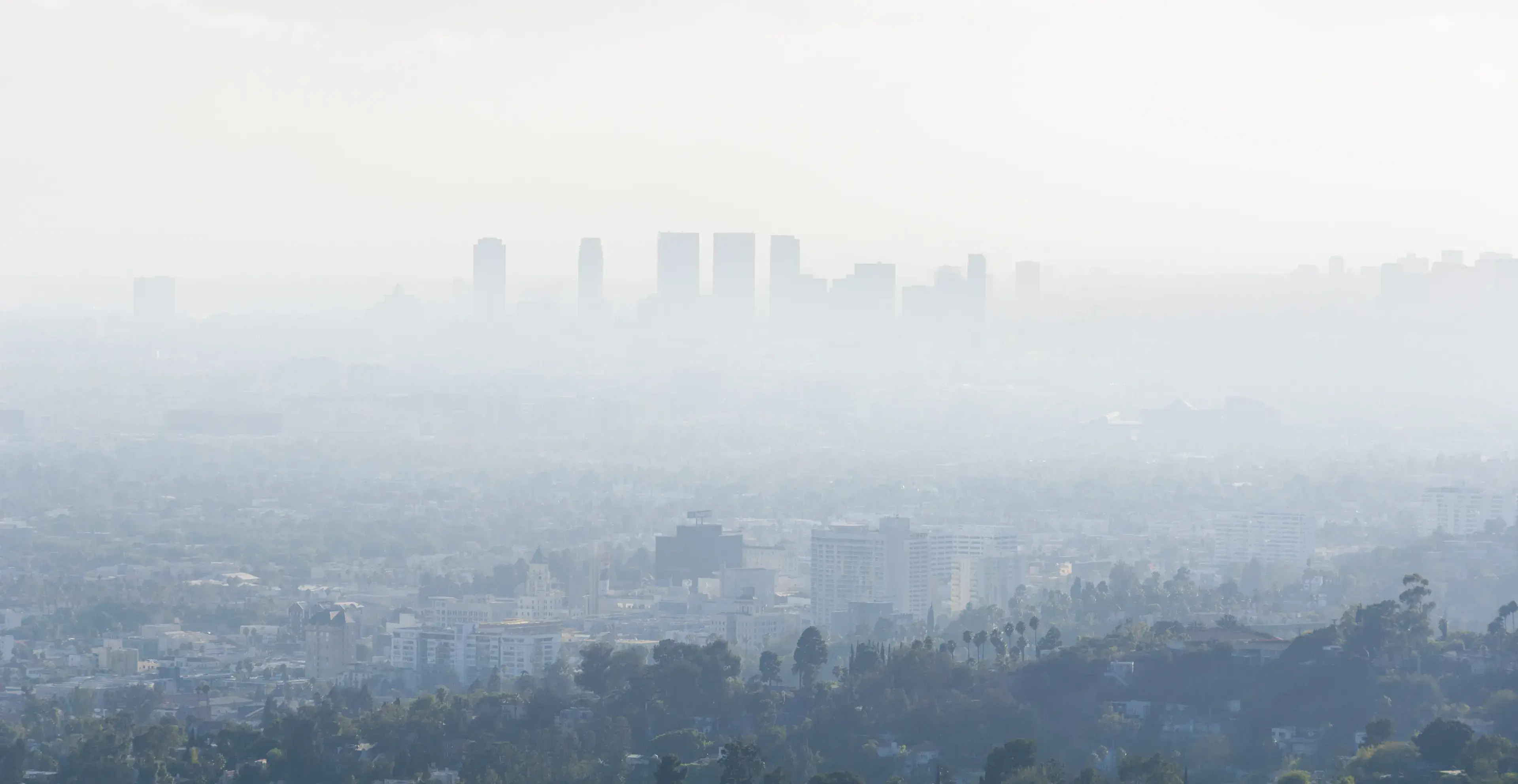
Author: Andrius Kaziliunas
4th Sep 2016 - Los Angeles, United States. Downtown skyscrapers silhouettes of the city of Los Angeles. Poor visibility, smog, caused by air pollution.
Were Last Winter’s Winds Normal or Extreme?
Nothing appears to fit into a ‘normal’ category anymore when it comes to the weather. Sure, there are plenty of days that fall into the usual range for temperatures during a period, but it is the extremes that are nowadays well beyond the “averages” that have been tracked for close to 200 years. Record heat is being recorded far more than record frigid days, there are more droughts as well as more destructive storms including hurricanes that arise more frequently, and with more power than seen in the past.
The January wildfires were exacerbated by the worst possible conditions coming together at the same time. There were drought conditions in Southern California and low humidity which is a recipe for disaster. The previous winter’s excess vegetation from heavy rains had built up over time, and then the arrival of Santa Ana winds which in some places were 100 miles per hour made matters that much worse.
Winds of this magnitude are considered well beyond the threshold for hurricane force winds which begin at 74 mph. They can make a fire literally explode in a matter of minutes, and this is exactly what occurred with the Palisades and Eaton fires. These two massive fires combined to burn more than 40,000 acres, an area nearly the size of the city of Washington, D.C. Other smaller fires which were more easily contained burned a few thousand additional acres in various locations.
To answer the question at the top of this section, the winds were undoubtedly extreme. However, climate change is making scenarios such as last January’s in the Los Angeles less shocking when they occur. There may be close to the same number of days with wildfires, but the wildfires are larger and more powerful than in the past. Add stronger winds to the equation and you can see what the potential outcome is.
Where Were the January 2025 Los Angeles Wildfires Located?
The two largest wildfires in January 2025 were named the Palisades Fire and the Eaton Fire. Both started on January 7, with the exact cause still to be determined as I drafted this article. What is known is that Southern California had received no measurable precipitation for more than eight months and that the region was considered to be under moderate drought conditions.
On Monday, January 6, red flag warnings had been issued by the National Weather Service (NWS) to advise the public and first responders of the extremely dangerous wildfire conditions. A “life-threatening” windstorm was a distinct possibility with Santa Ana winds predicted in the range of 60-80 miles per hour. Actual wind gusts during the fires peaked even higher.
Residents in several areas which included where the Palisades and Eaton fires occurred were advised to “use extreme caution with anything that can spark a wildfire”. Also, people who lived close to the forests of the Santa Monica Mountains, Topanga Canyon, Angeles National Forest, and the San Gabriel Mountains were further advised to be prepared for possible evacuation on short notice.
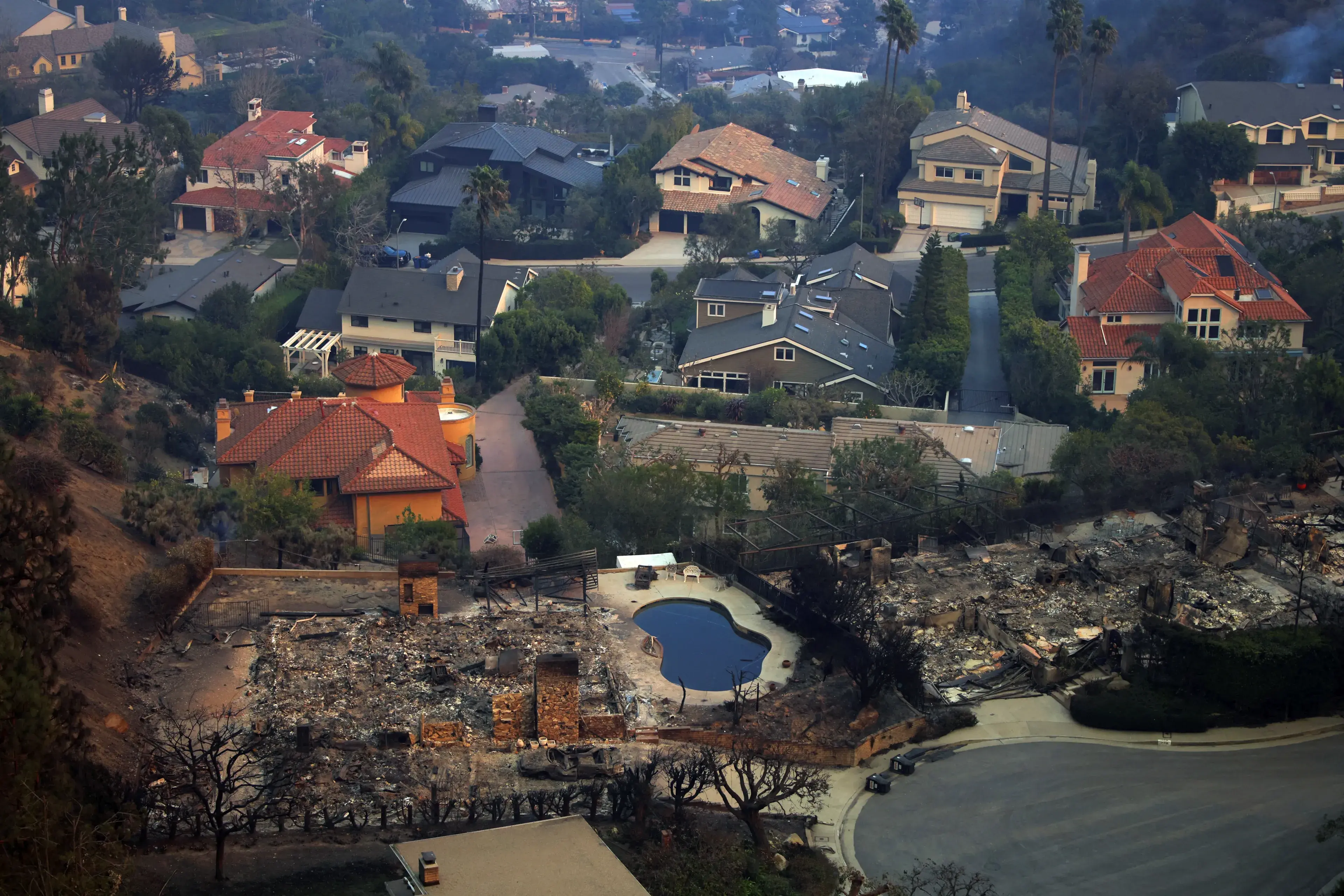
- Palisades Fire: Pacific Palisades is located about 20 miles due west of downtown Los Angeles and is known for the mountains that reach up from the ocean by the Pacific Coast Highway (PCH, CA 1). Driving along the coast another 10 miles takes you to Malibu. This destructive fire totally destroyed 6,837 buildings and killed 12 people. It was the 3rd most destructive fire in California wildfire history and the 10th deadliest. The fire burned 23,707 acres and is now the most devastating fire to occur in the history of the City of Los Angeles. Parts of Pacific Palisades, Topanga, and Malibu were impacted by this fire.
- Eaton Fire: Named for its proximity to Eaton Canyon in the San Gabriel Mountains, the Eaton Fire was nearly as massive as the Pacific Palisades fire. What turned out to be the 2nd most destructive fire in California history and the 5th deadliest with 17 people losing their lives here, spread rapidly into the suburban enclave of Altadena in the foothills 15 miles northeast of downtown Los Angeles. If you are unfamiliar with this area, it is the last community heading north from Pasadena. More than 9,000 structures were destroyed here, with the possible cause of downed power lines being operated by Southern California Edison. The investigation is ongoing. The Eaton Fire was so intense and aggressive that it took 24 to bring it under control.
Author: Arprince
Debris litters the ground of a burnt house in the Pacific Palisades neighborhood, following powerful wind-driven wildfires that forced evacuations in Los Angeles, California.
Were Los Angeles Tourist Attractions Affected by the Wildfires?
The good news is that no area tourist attractions were damaged by the fires in January. Universal Studios Hollywood did close for two days, January 8 and 9, out of an abundance of caution. The Eaton fire was spreading rapidly at the time and authorities didn’t know which direction it would ultimately go. Aside from many days of smoky skies, everything turned out fine.
As you can imagine, traffic throughout L.A. and Hollywood was worse than usual (which is hard to believe) with hundreds of thousands of cars being re-routed away from the fires each day for nearly a month. With more than 300,000 people on evacuation alerts, emergency provisions were set in place to move these people via local highways and main arteries that impacted traffic everywhere.
The Santa Monica Pier wasn’t damaged, but its location close to Pacific Palisades made it an area to avoid as a tourist during this period. The same was true for Venice Beach as it is just a mile and a half south of the pier.
Another tourist area that closed due to the Palisades Fire was the Pacific Coast Highway (PCH)/CA 1 which hugs the coast from Pacific Palisades to Malibu, Santa Barbara, and beyond to Big Sur, Monterey Bay, and eventually San Francisco. This spectacular roadway remains inaccessible due to mudslides and damage to the highway and cliffs from the fire. It will be several more months at best until the highway is repaired and reopened to traffic.
Sadly, many Hollywood film and television celebrities lost their homes in Pacific Palisades and Malibu. Some famous folks who you may recognize include Julia Louis-Dreyfuss, Paris Hilton, Bella Hadid, Jeff Bridges, Zooey and Emily Deschanel, Anthony Hopkins, Madlib, John Goodman, Eugene Levy, Ricki Lake, Billy Crystal, and many others. Of course, thousands of others without the means to re-build are also left with nothing, but everyone impacted by the fires lost many of their life’s possessions in the fires.

Author: MSJ Photo
Aerial view of the Pacific Palisades after the fire
What are the Santa Ana Winds?
When inland deserts known as the Great Basin become cooler than Southern California, the downslope air from the mountains gets squeezed and heats up. As the winds get warmer they also become drier and stronger as they travel through mountain passes mostly from Nevada and Utah toward Los Angeles, San Diego, and the Pacific Ocean. These gusty winds produce what is known as Santa Ana conditions which typically are most powerful from September through May.
Low humidity, cloudless days under high pressure, dry vegetation, and fierce winds are the perfect ingredients for wildfires in the U.S. Southwest, and that is exactly what we saw in January 2025, especially in the Los Angeles area. Santa Ana winds advisories are added to the weather forecast when they are predicted to exceed 35 miles per hour, but these frequently blow in the 40 to 60 mph range with gusts up to 90 and 100 miles per hour.
So, When is the Best Time to Visit Los Angeles?
Generally speaking, the entire year Los Angeles is blessed with comfortable temperatures and little rain. But, and there’s always a but, Santa Ana winds and powerful Pacific storms during the winter can make for some disruption to your plans.
The existence of Santa Ana winds is nothing new, but with the Los Angeles area becoming more expansive and densely populated, the wildfires exacerbated by them impact far more people than they did in the past. And with climate change leading to longer and more droughts, the already parched vegetation is more susceptible to wildfires.
That being said, visiting the L.A. area usually means warm temperatures and little to no precipitation. In fact, during the dry season from May through October, it can be downright hot, especially away from the shore. Cloudless days with temperatures in the low 80s during the day and low 60s at night occur for extended periods. There is virtually no rain during this six month time period.
The late fall to early spring wet season runs from November through April. However, L.A.’s wet season and that experienced by the Pacific Northwest and even San Francisco are worlds apart. Winter storms here can be intense with copious amounts of rain dumped on the mountains throughout the area due to upslope winds. It is also common to see majestic snowcapped peaks after a winter storm departs the area. Wet season temperatures range from highs in the upper 60s to the lower 70s, and lows in the upper 40s to lower 50s.
Author: Strike First
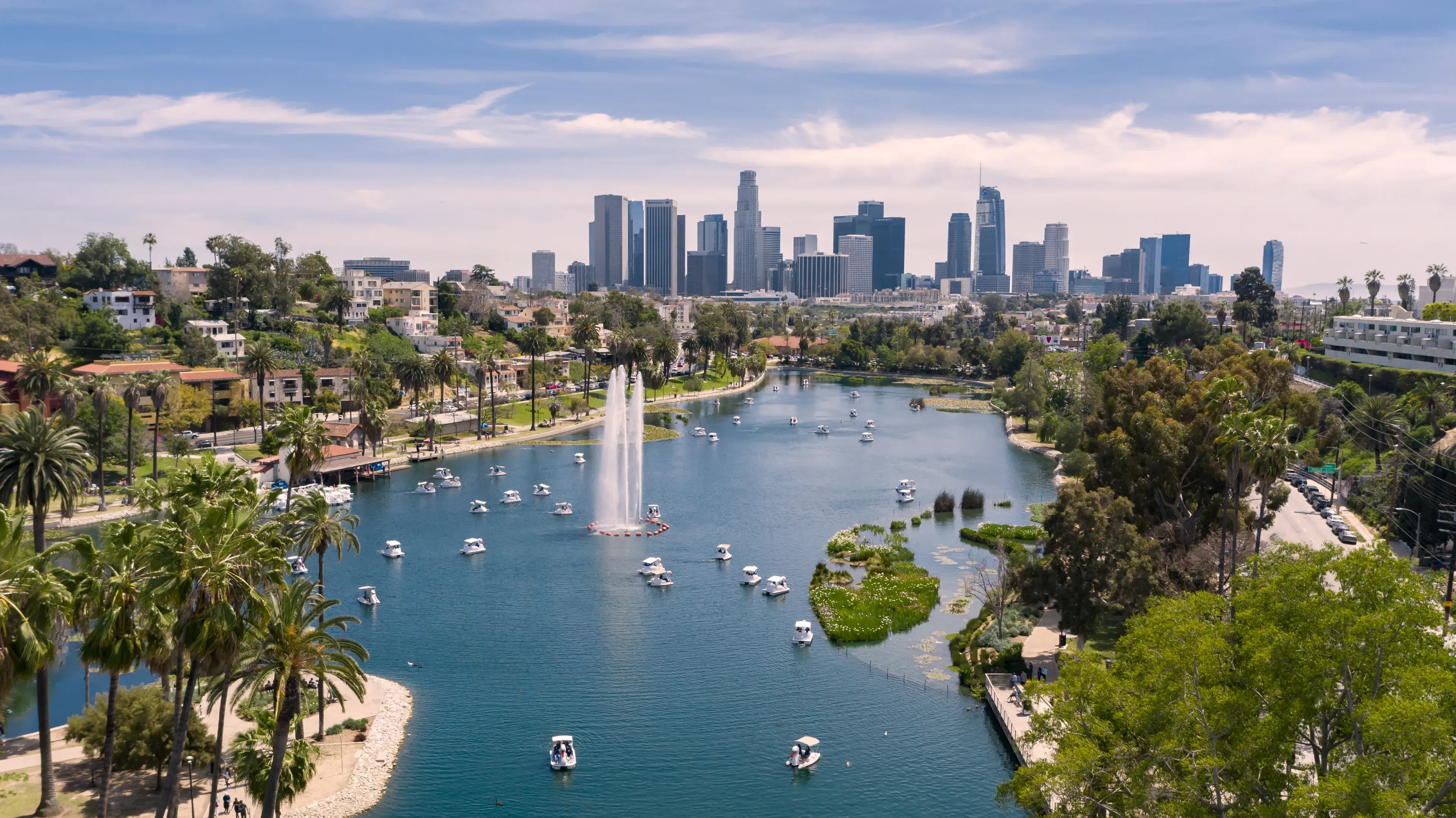
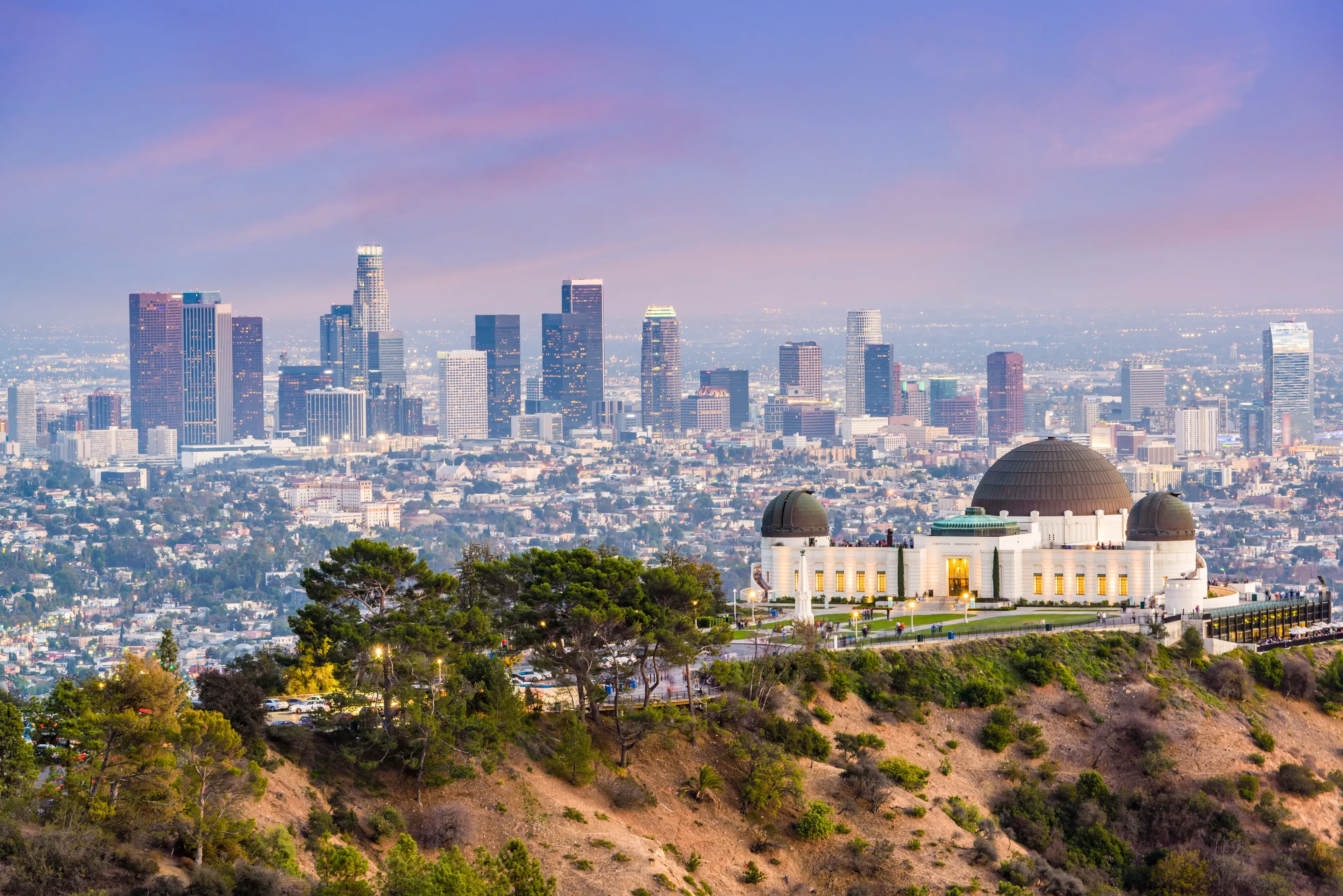
Aerial view of Echo Park with downtown Los Angeles skyline
Now is the Time to Start Planning an L.A. Getaway
With May through October being the dry season, and July and August being the hottest and busiest months with kids out of school, if you aren’t vacationing with children, then May, June, September, and October are the best months to visit. Fewer crowds translates into shorter lines at the various theme parks, less expensive hotel rooms, rental cars, and airfares.
Of course, many of you are bringing the kids in tow for a week of activities during the summer months when they are out of school. If you can, June will be a bit cooler and less busy than July and August, but there will still be plenty of vacationers hitting the roads and taking to the skies for a family getaway.
December, January, and February are historically the wettest months of the wet season, so I would add November, March, and April to the dry season months above as the best time to travel to Los Angeles.
The Travelated website is the place to get started in planning this and other escapes. We offer thousands upon thousands of hotels in all price ranges, and in all of the top locations. You may choose to stay in more than one area while in L.A. and we have you totally covered no matter where you want to lay your head. Whether you prefer to stay close to Disneyland, Universal Studios Hollywood, the beach, or within striking distance (pardon the pun) of Dodgers Stadium, we have the right accommodations for you.

Cities
Los Angeles City Hall Guide: History, Observation Deck, What to See & Where to Stay Nearby
May 16, 2025
Cities
14 Fun and Free Things to Do Near Me in Los Angeles – Best Places to Visit Without Spending a Dime
April 29, 2025